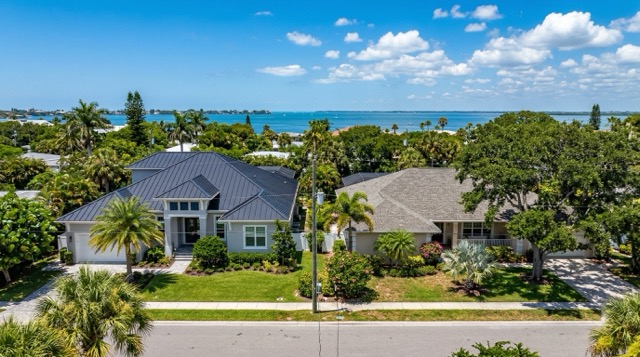
Is Metal Roofing Worth It for Coastal Homes in Sarasota, Florida?
For most coastal Sarasota homeowners, standing seam metal roofing is worth the higher upfront cost — it's rated for 140–160 mph winds, lasts 40–70 years, resists salt air corrosion, and can reduce insurance premiums and cooling costs enough to offset the price difference over time. But the answer depends on where exactly you are in Sarasota, what your HOA allows, and how long you plan to stay in your home.
Table of Contents
- Metal vs Shingle: The Head-to-Head Comparison for Sarasota
- How Does Salt Air Affect Each Material on Siesta Key and Longboat Key?
- What About Cost? Metal vs Shingle on a Typical Sarasota Home
- Insurance Premium Differences: Does Metal Actually Save You Money?
- HOA Considerations in Lakewood Ranch and Palmer Ranch
- The Tile Question: Why Sarasota's Barrier Islands Are Changing
- When Upgrading from Shingle to Metal Makes Sense
- What SCM Roofing Recommends
- Frequently Asked Questions
- Key Takeaways
Metal vs Shingle: The Head-to-Head Comparison for Sarasota
The two most common roofing choices for Sarasota homeowners come down to architectural shingles and standing seam metal. Here's how they compare on the factors that matter most in coastal Florida:
Wind Resistance
Standing seam metal roofing is rated for 140–160 mph winds, which meets or exceeds Florida's highest wind speed design requirements. Architectural shingles are rated for 110–130 mph depending on the product line and installation method. In a county that took direct hits from storm surge during Hurricane Ian and wind damage during past Gulf storms, that 30–50 mph gap matters. A Category 4 hurricane brings sustained winds of 130–156 mph — shingles are at their absolute limit, while metal still has margin.
Lifespan
Metal roofing lasts 40–70 years in Florida's climate. Architectural shingles last 20–30 years, though in Sarasota's intense UV exposure and humidity, many shingle roofs start showing significant wear at 15–20 years. That means a homeowner who installs metal at age 40 may never need another roof. A shingle roof installed today will likely need replacement by 2050.
Weight and Structure
Metal panels weigh about 1.0–1.5 pounds per square foot, while asphalt shingles weigh 2.5–4.5 pounds per square foot. For older Sarasota homes — especially those west of US-41 near the water — the lighter weight of metal means less structural stress, which can matter on homes with aging trusses.
Noise
The old knock on metal roofing was rain noise. Modern standing seam systems installed over solid roof decking with proper underlayment are no louder than shingle roofs during rain. This is a solved problem, though it persists as a misconception.
How Does Salt Air Affect Each Material on Siesta Key and Longboat Key?
Salt air is the great differentiator between coastal and mainland roofing in Sarasota. Homes on Siesta Key, Longboat Key, Lido Key, Casey Key, and Bird Key face relentless salt exposure that accelerates material degradation.
Shingles in Salt Air
Asphalt shingles don't corrode the way metal does, but salt air accelerates granule loss — the gritty protective layer on top of each shingle. Once granules wear away, UV breaks down the asphalt underneath much faster. Shingle roofs on Sarasota's barrier islands often show significant wear 3–5 years earlier than identical roofs on the mainland. A 25-year-rated shingle might realistically last 18–22 years on Siesta Key.
Metal in Salt Air
Standard galvanized steel can corrode in salt air environments within 10–15 years, which is why material selection matters. For Sarasota's barrier islands, aluminum standing seam is the preferred choice — aluminum naturally resists salt corrosion and doesn't require the protective coatings that steel depends on. Galvalume-coated steel (aluminum-zinc alloy) is another solid option that performs well within a mile of the coast. Avoid bare galvanized steel on any barrier island property.
The Winner for Barrier Islands
For homes directly on or near the Gulf — Siesta Key, Longboat Key, and anywhere west of the Intracoastal — aluminum standing seam metal is the strongest long-term choice. The combination of wind resistance, salt tolerance, and longevity makes it hard to beat for coastal Sarasota properties.
What About Cost? Metal vs Shingle on a Typical Sarasota Home
Here's what Sarasota homeowners are paying in 2026 for a typical 2,000 square foot home:
Architectural Shingles
- Material and installation: $10,000–$18,000
- Lifespan: 20–30 years (15–22 on barrier islands)
- Cost per year of life: $500–$700 on the mainland, $700–$1,000 on barrier islands
Standing Seam Metal
- Material and installation: $20,000–$46,000 (aluminum on the higher end)
- Lifespan: 40–70 years
- Cost per year of life: $400–$750
The Long-Term Math
On a per-year basis, metal and shingle roofing are surprisingly close in cost. The difference is that metal requires one large upfront payment, while shingles require two or three replacements over the same period — each time at current market prices, which historically trend upward.
For a Sarasota homeowner planning to stay in their home for 20+ years, metal roofing usually wins on total cost of ownership. For someone who expects to sell within 10 years, shingles may make more financial sense — though a new metal roof does increase resale value and can be a selling point in a hurricane-conscious market.
Insurance Premium Differences: Does Metal Actually Save You Money?
Yes, though the amount varies by insurer and the specifics of your home. Here's how it works:
Wind Mitigation Credits
A metal roof typically scores higher on a wind mitigation inspection than an asphalt shingle roof, particularly on the "roof covering" section. Standing seam metal with concealed fasteners qualifies as FBC (Florida Building Code) equivalent, which triggers a discount on the windstorm portion of your premium. Combined with other wind mitigation features like hip roof geometry and hurricane straps, Sarasota homeowners with metal roofs commonly see 20–40% lower windstorm premiums compared to standard shingle roofs.
Impact-Resistant Rating
Some standing seam metal roofing systems carry a UL 2218 Class 4 impact rating — the highest available. In Florida, this qualifies for additional insurance discounts that shingle roofs typically don't receive unless they're specifically impact-rated products.
Real Dollar Savings
For a Sarasota homeowner paying $4,000–$8,000 per year in homeowners insurance (common in coastal Pinellas and Sarasota counties), a 20–40% reduction on the windstorm portion can mean $500–$2,000 per year in savings. Over 30 years, that's $15,000–$60,000 in cumulative savings — a significant offset against the higher upfront cost of metal.
HOA Considerations in Lakewood Ranch and Palmer Ranch
If you live in a deed-restricted community in Sarasota, your roofing options may be limited by your HOA's architectural guidelines. This is one area where the metal-vs-shingle decision might be made for you.
Lakewood Ranch (Sarasota Side)
Many Lakewood Ranch communities on the Sarasota County side have strict architectural review processes. Some subdivisions allow standing seam metal in specific colors and profiles, while others require shingles or tile only. Before committing to a roofing material, submit an Architectural Review Board (ARB) application with your proposed material, color, and manufacturer specifications. Plan for 2–4 weeks for approval.
Palmer Ranch
Palmer Ranch communities generally have conservative aesthetic standards that lean toward tile and shingle. Standing seam metal is gaining acceptance in some Palmer Ranch neighborhoods, particularly in earth tones and low-profile panels that blend with the community aesthetic. Check your specific covenants — what's allowed in one Palmer Ranch village may not be allowed in another.
The Trend
HOAs across Sarasota are gradually loosening metal roof restrictions as homeowners push for better hurricane protection and insurers reward the upgrade. If your HOA currently prohibits metal, it's worth attending a board meeting to advocate for a policy update — especially after a storm event when the conversation shifts toward resilience.
The Tile Question: Why Sarasota's Barrier Islands Are Changing
Tile roofing — concrete and clay barrel tile specifically — has dominated Sarasota's barrier islands and upscale mainland neighborhoods for decades. Tile looks beautiful, handles wind well, and the tiles themselves can last 50–80 years. So why are more Sarasota homeowners switching to metal?
The Underlayment Problem
Here's what most Sarasota homeowners don't realize: the tiles almost never fail, but the underlayment beneath them does. Traditional felt underlayment degrades in 15–25 years in Florida's heat and humidity. When it fails, every gap between tiles becomes a direct path for water into your home. The result is a roof that looks perfect from the street but leaks during heavy rain.
The Cost of Tile Underlayment Replacement
Replacing the underlayment on a tile roof in Sarasota means removing every tile, replacing the paper or synthetic membrane, and reinstalling the tiles — a process that costs $20,000–$40,000 depending on roof size and tile type. At that price point, many homeowners opt to switch to standing seam metal instead of re-underlaying their tile, getting better wind resistance and a longer-lasting system for comparable money.
West of US-41: The Transition Zone
Homes west of US-41 in Sarasota — particularly in neighborhoods like Harbor Acres, Cherokee Park, and Indian Beach/Sapphire Shores — are in a transition zone. Many were built in the 1960s–1980s with tile roofs that have been re-underlayed once already. When it's time for the second underlayment replacement, more and more homeowners are converting to standing seam metal. The numbers make sense, and the hurricane protection is superior.
When Upgrading from Shingle to Metal Makes Sense
Not every Sarasota homeowner needs a metal roof. Here's a framework for deciding:
Metal Makes Sense When:
- You live on a barrier island or within a mile of the Gulf — salt air and wind exposure justify the investment
- You plan to stay in the home for 15+ years — enough time to recoup the cost difference through insurance savings and avoided re-roofing
- Your current shingle roof is due for replacement anyway — the incremental cost of upgrading to metal vs installing new shingles narrows significantly
- Your insurance premiums are high — the wind mitigation credits from a metal roof can meaningfully reduce your annual costs
- Your HOA allows it — check first before getting attached to the idea
Staying with Shingles Makes Sense When:
- You're selling within 5–10 years and want lower upfront costs
- Your HOA restricts metal roofing and isn't likely to change the policy
- You live inland (east of I-75) where salt air isn't a factor and wind exposure is lower
- Budget is the primary constraint — a quality architectural shingle roof still provides solid hurricane protection at half the upfront cost
What SCM Roofing Recommends
We've installed both metal and shingle roofs across Sarasota County for over 25 years — on Siesta Key waterfront homes, Lakewood Ranch subdivisions, downtown Sarasota bungalows, and everything in between. Here's our straight take:
If you're on the barrier islands or within a mile of the water, standing seam aluminum metal is the best long-term investment. The salt air performance, wind rating, and insurance savings make the math work over time. If you're in a mainland community like Palmer Ranch or Lakewood Ranch, the decision is more nuanced — it depends on your HOA, your budget, and how long you plan to stay.
What we tell every Sarasota homeowner: don't make this decision based on a neighbor's experience or a number you saw online. Get a proper assessment of your specific roof, your home's structure, and your insurance situation. As a GAF Master Elite certified contractor, SCM Roofing can evaluate both options for your home and give you real numbers — not sales pressure.
---
Frequently Asked Questions
Q: Is a metal roof worth the extra cost for a home on Siesta Key or Longboat Key?
A: For barrier island homes in Sarasota, standing seam aluminum metal roofing is typically worth the extra cost. The combination of 140–160 mph wind ratings, natural salt air resistance, 40–70 year lifespan, and insurance premium savings of $500–$2,000 per year makes the long-term math favorable compared to replacing shingles two or three times over the same period.
Q: How much does a metal roof cost vs shingles on a 2,000 sq ft Sarasota home?
A: For a typical 2,000 sq ft home in Sarasota, architectural shingles cost $10,000–$18,000 installed, while standing seam metal costs $20,000–$46,000 depending on the metal type (steel vs aluminum). Aluminum costs more but is recommended for any Sarasota home near the coast due to its salt air resistance. On a per-year-of-life basis, both materials cost roughly $400–$750 per year.
Q: Will my Lakewood Ranch HOA allow a metal roof in Sarasota County?
A: It depends on your specific community. Some Lakewood Ranch subdivisions on the Sarasota side now allow standing seam metal in approved colors and profiles, while others still require shingle or tile. Submit an Architectural Review Board application with your proposed material specs before signing a roofing contract. HOA metal roof policies across Sarasota are gradually loosening as homeowners push for better hurricane protection.
Q: Do metal roofs save money on insurance in Sarasota, Florida?
A: Yes. Metal roofs typically score higher on wind mitigation inspections, which can reduce the windstorm portion of your Sarasota homeowners insurance by 20–40%. For a homeowner paying $4,000–$8,000 annually in premiums, that can mean $500–$2,000 per year in savings. Over 30 years, cumulative savings of $15,000–$60,000 can significantly offset the higher upfront cost of metal roofing.
Q: Why are Sarasota homeowners switching from tile to metal roofing?
A: The main reason is the tile underlayment problem. While concrete and clay tiles can last 50–80 years, the underlayment beneath them degrades in 15–25 years in Florida's climate. Replacing underlayment on a tile roof costs $20,000–$40,000 — at which point many Sarasota homeowners choose to switch to standing seam metal instead, getting better wind resistance and a longer-lasting complete system for comparable money.
Q: Does a metal roof keep a Sarasota home cooler than shingles?
A: Yes. Metal roofing with reflective coatings can reduce cooling costs by 10–25% compared to standard asphalt shingles. In Sarasota's climate, where air conditioning runs 8–10 months per year, that translates to meaningful energy savings. Light-colored metal panels reflect more solar radiation than dark shingles, keeping the attic space cooler and reducing the load on your HVAC system.
Q: When should I replace my shingle roof with metal vs staying with shingles in Sarasota?
A: Upgrade to metal if you live on a barrier island or near the coast, plan to stay 15+ years, and your HOA allows it. Stay with shingles if you're selling within 5–10 years, live inland east of I-75, or your HOA restricts metal. If your shingle roof is due for replacement anyway, the incremental cost of upgrading to metal narrows significantly — talk to SCM Roofing at 855-SCM-ROOF for a comparison estimate specific to your Sarasota home.
---
Key Takeaways
- Standing seam metal roofing is rated for 140–160 mph winds and lasts 40–70 years, compared to 110–130 mph and 20–30 years for architectural shingles — a meaningful difference for coastal Sarasota homes.
- On a per-year-of-life basis, metal and shingle roofing cost roughly the same ($400–$750/year), but metal eliminates the need for two or three re-roofing cycles.
- Aluminum standing seam is the best choice for Sarasota's barrier islands (Siesta Key, Longboat Key, Lido Key) due to its natural salt air resistance.
- Many Sarasota homeowners switching from tile to metal are driven by the tile underlayment problem — tiles last 50–80 years, but underlayment fails in 15–25, requiring a $20,000–$40,000 replacement that makes metal conversion attractive.
---
Comparing roofing options for your Sarasota home? SCM Roofing provides free estimates across Sarasota County. Call us at 855-SCM-ROOF or request an appointment online.