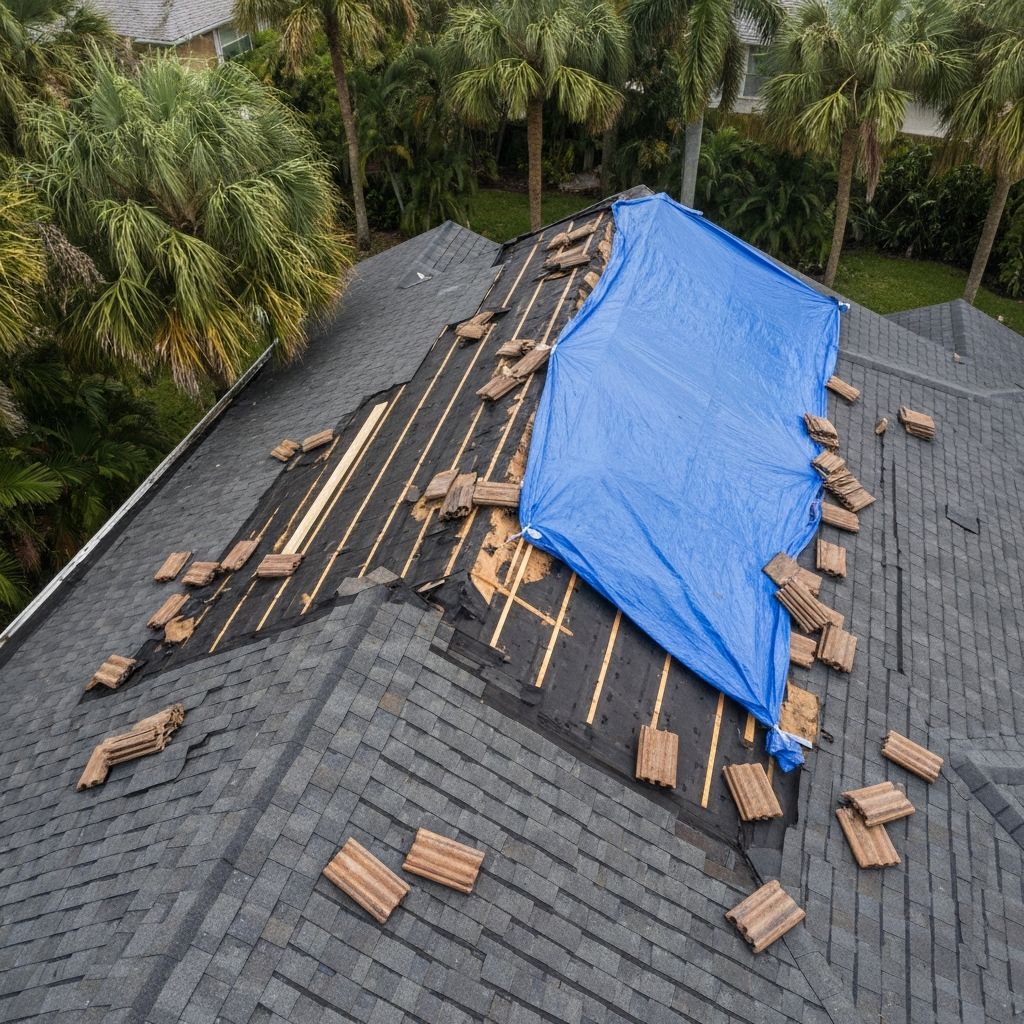
Hurricane & Storm Damage Roof Repair
When a storm hits your roof, you need a crew that shows up fast, knows how to stabilize the damage, and handles the documentation your insurance company requires. We've been doing this across Florida's Gulf Coast for decades.
24/7 emergency response available
If a hurricane or tropical storm just came through and your roof took damage, here's what matters right now: stop the water, document the damage, and get a professional assessment before you talk to your insurance company.
That's exactly what we do.
We've responded to storm damage after every major hurricane and tropical storm that's hit Florida's Gulf Coast in the last several decades. We know what adjusters look for, we know what repairs actually cost, and we know the difference between damage that needs emergency tarping tonight and damage that can wait for a proper repair next week.
If you've got water coming in right now, skip the rest of this page and call us. We'll get a crew out today to tarp the affected area and stop the intrusion. Everything else — the permanent repair, the insurance documentation, the timeline — we'll handle in order once the immediate problem is contained.
Types of Hurricane and Storm Damage We Handle
Common types of hurricane and storm damage to Florida roofs include wind damage (lifted, torn, or missing shingles and tiles), debris impact (punctures and cracks from tree limbs and flying objects), water intrusion from compromised flashings and underlayment, ridge and hip failure from sustained high winds, soffit and fascia damage, and gutter destruction. The severity ranges from minor cosmetic damage to full structural compromise requiring emergency stabilization.
Wind Damage — Lifted, Torn, or Missing Material
This is the most common storm damage we see. High winds get under the edge of shingles, tiles, or metal panels and peel them back or rip them off entirely. On shingle roofs, you'll often see a line of missing shingles along the windward side or at ridge lines and hips where wind pressure is highest. On tile roofs, the mortar along ridges and hips cracks under sustained wind, and individual tiles shift or break loose.
What to look for from the ground: bare patches on the roof surface, shingles or tiles in the yard or on neighboring properties, exposed underlayment (dark paper or white/gray membrane visible where roofing material should be).
Debris Impact — Tree Limbs and Flying Objects
Fallen tree branches are the second most common damage source during Florida storms. A branch doesn't need to be massive to cause serious damage — even a small limb falling from height can crack tiles, puncture shingle layers, or dent metal panels. Larger limbs can punch through the roof surface and into the deck, requiring structural repair.
Important: Don't try to remove a large tree branch from your roof yourself. The branch may actually be plugging the hole it created, and removing it without tarping first can cause immediate water intrusion. Call us — we'll stabilize the area before removal.
Water Intrusion — Compromised Flashings and Seals
Hurricane-force winds drive rain horizontally, which pushes water into joints, seams, and penetration points that handle normal rainfall just fine. Wall flashings, chimney flashings, pipe boots, skylight seals, and valley flashings are all vulnerable during extreme wind-driven rain events. The damage may not be visible from outside — the first sign is often a water stain on an interior ceiling or wall days after the storm.
Ridge and Hip Failure
The ridge line (peak of the roof) and hip lines take the most wind abuse during a hurricane. On tile roofs, the mortar holding ridge and hip caps fails under sustained wind, and the cap tiles can blow off entirely. On shingle roofs, ridge cap shingles are often the first to go because they sit at the highest point of wind exposure. A blown ridge cap leaves the entire ridge seam exposed to direct water entry.
Soffit and Fascia Damage
The soffit (underside of the overhang) and fascia (the board the gutter attaches to) are extremely vulnerable to wind damage. High winds can rip soffit panels right off, exposing the attic to wind-driven rain. Once the soffit is gone, rain blows directly into the attic space, causing water damage to insulation, drywall, and framing even if the roof surface above is intact.
This is one of the most overlooked types of storm damage. People check the roof surface and miss the soffits entirely.
Gutter Damage and Detachment
Gutters take a beating during hurricanes — they catch debris, get overloaded with water volume, and can be ripped from the fascia by wind or falling branches. Damaged gutters cause water to pour down the side of the house and pool at the foundation instead of being directed away from the structure. We repair and replace gutters as part of our storm damage restoration.
What to Do After Your Roof Takes Storm Damage
After a hurricane or storm damages your roof, the recommended steps are: ensure personal safety first, document all visible damage with photos and video from the ground, contact a licensed roofing contractor for emergency tarping and professional assessment, file your insurance claim with your carrier, then schedule permanent repairs once the adjuster has inspected and the claim is in process. Do not attempt roof repairs yourself and do not sign contracts with storm-chasing companies that show up uninvited.
Stay Safe — Don't Get on the Roof
This sounds obvious, but every year homeowners in Florida get injured trying to inspect or tarp their own roofs after a storm. Wet, damaged roofing surfaces are extremely dangerous. Loose materials can shift under your weight. Structural damage may not be visible. Stay on the ground and call a professional.
Document Everything From the Ground
Walk around your property and photograph all visible damage — missing shingles or tiles, debris on the roof, damaged soffits and gutters, fallen tree limbs, water stains inside the house. Take photos and video. Include wide shots and close-ups. Document the date and time. This is critical evidence for your insurance claim, and the more you have, the stronger your position.
Call Us for Emergency Tarping and Assessment
If your roof has exposed areas, active leaks, or structural damage, we provide same-day emergency tarping to stop water intrusion. Once the immediate threat is contained, we do a full professional damage assessment — documenting every issue with photos, measurements, and a detailed scope of repair. This assessment becomes the foundation of your insurance claim documentation.
File Your Insurance Claim
Contact your homeowner's insurance carrier to open a claim. You don't need to wait until the roof is fully assessed — open the claim as soon as possible, because Florida has deadlines for reporting storm damage. When you file, reference the photos you took and let them know you have a professional assessment in progress.
Meet With Your Adjuster (We'll Be There)
Your insurance company will send an adjuster to inspect the damage. We can meet the adjuster on-site, walk them through every item on our damage report, answer their technical questions, and make sure nothing gets missed in their assessment. This is one of the most valuable things we do for storm damage customers — adjusters sometimes miss damage that's not immediately visible, and having a roofing professional on-site ensures the full scope gets documented.
Permanent Repair
Once the claim is in process and the adjuster has signed off on the scope, we schedule the permanent repair. Depending on the extent of damage, this could be anything from replacing a section of shingles to a full re-roof. We coordinate the timing with your insurance process so you're not waiting longer than necessary and not paying out of pocket for work that should be covered.
A Warning About Storm-Chasing Roofing Companies
After every major storm in Florida, out-of-state roofing companies flood the area. They knock on your door, they leave flyers, they offer to "handle everything with your insurance." Some of them are legitimate contractors expanding their range to help. Many of them are not.
Here's what to watch for:
They ask you to sign an Assignment of Benefits (AOB)
An AOB transfers your insurance claim rights to the contractor. Once you sign it, you've lost control of your own claim. The contractor negotiates directly with your insurer, and you have limited recourse if the work is subpar or the cost is inflated. We never ask for an AOB. Your claim is your claim.
They offer to "waive your deductible"
This is insurance fraud in Florida. Any contractor who offers to waive your deductible is either going to inflate the repair cost to cover it (which is fraud) or do substandard work to absorb the difference. Either way, you're exposed. Walk away.
They demand a large deposit upfront
Standard practice for storm damage repair is a reasonable deposit after the contract is signed, with the balance due on completion. A company demanding 50%+ upfront before any work begins — especially one you've never heard of — is a red flag. We collect a standard deposit per our contract terms, with the balance due when the work is complete and you're satisfied.
They can't show you a Florida contractor's license
Every roofing contractor working in Florida must hold a valid state license. Ask for it. Verify it on the Florida DBPR website. Out-of-state storm chasers often operate under temporary permits or no license at all, which means no accountability and no recourse if something goes wrong. We're licensed, insured, and based right here on the Gulf Coast.
How We Help With Your Insurance Claim
A roofing contractor assists with insurance claims by providing professional damage documentation (photos, measurements, repair scope), meeting with the insurance adjuster on-site, answering technical questions about the damage, and providing a detailed repair estimate. The homeowner files the claim with their insurer and retains control of the process. The contractor provides the evidence and expertise that supports the claim.
We don't file your claim for you — that's between you and your insurer, and you should always retain control of that relationship. What we do is make sure you have everything you need to file a strong claim and get fair compensation for the actual damage.
Here's specifically what we provide:
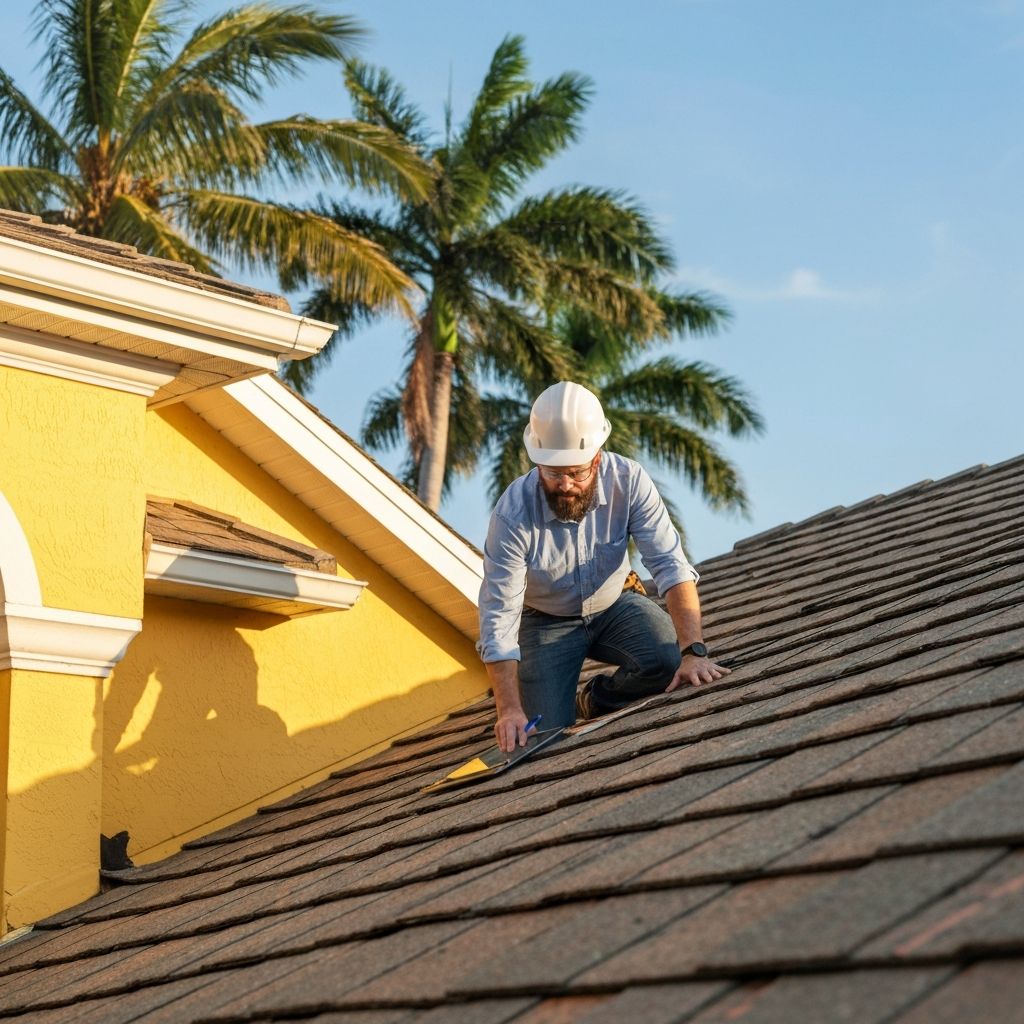
One thing we'll be direct about: insurance adjusters work for the insurance company, not for you. Their job is to assess damage, and they're usually fair — but they're also working under time pressure, sometimes looking at dozens of claims a day. Having your own professional assessment and a knowledgeable roofer on-site during the adjuster's visit makes a real difference in making sure nothing gets overlooked or undervalued.
If your claim is denied or underpaid, we can provide additional documentation and photos to support a re-inspection request or supplement. We won't tell you to hire a public adjuster unless the situation genuinely warrants it — and we'll explain the tradeoffs if it does.
How Different Roof Types Handle Storm Damage
Shingle Roofs
Most common damage: missing or lifted shingles along windward edges, ridges, and hips. Shingle tabs can peel back or tear off entirely. The adhesive strip that bonds each shingle to the one below it is the weakest point — once wind gets under the edge, the shingle is gone.
Repair approach: Replace damaged shingles, check underlayment beneath exposed areas, replace any compromised pipe boots or flashings. If the damage is widespread (more than 30% of the roof surface), a full re-roof may be the better path.
Tile Roofs
Most common damage: cracked or broken tiles from debris impact, ridge and hip mortar failure, and shifted tiles that expose the underlayment beneath. Tile is heavy and handles wind well, but individual tiles are brittle and crack on impact. The underlayment under the tiles may also sustain damage from wind-driven rain even if the tiles look intact from above.
Repair approach: Replace broken tiles, reset ridge and hip mortar or foam adhesive, check underlayment condition via test lifts in damaged areas. If the underlayment was already aged before the storm, the storm damage may accelerate the need for a full re-tile.
Metal Roofs
Most common damage: denting from debris impact, lifted or loosened panels along edges and ridges, and damaged trim or flashing. Metal roofs generally survive high winds better than shingle or tile — the interlocking panel system resists uplift well. But large debris (tree limbs) can dent or puncture panels, and edge metal/trim can peel in sustained high winds.
Repair approach: Replace or repair dented/punctured panels, reseal any lifted seams, replace damaged trim and flashing. Metal panel replacement requires matching the panel profile and color — we source from the original manufacturer when possible.
Flat / Commercial Roofs
Most common damage: membrane punctures from flying debris, lifted seams from wind uplift (especially at corners and perimeters), blown-off edge metal, clogged or damaged drains causing ponding, and damage to rooftop equipment (HVAC units shifted or overturned).
Repair approach: Patch membrane punctures, re-weld lifted seams, replace edge metal, clear and repair drainage systems, assess and re-secure rooftop equipment. If wind uplift has separated large sections of membrane from the deck, a partial or full re-roof may be required.
Frequently Asked Questions About Storm Damage Roof Repair
Storm Damage Doesn't Wait. Neither Should You.
If a hurricane or tropical storm damaged your roof, the clock is running — on further water damage, on insurance filing deadlines, and on contractor availability. The sooner you call, the sooner we can get the damage contained, documented, and repaired. We've been restoring roofs after Florida storms for decades, and we'll walk you through every step from the first tarp to the final inspection.
24/7 emergency response • Insurance documentation included